
Industrial Technology

Apple unveils its first-ever touchscreen laptop
Apple has finally given in after two decades of fighting against the idea. It is one of its priciest laptops ever.
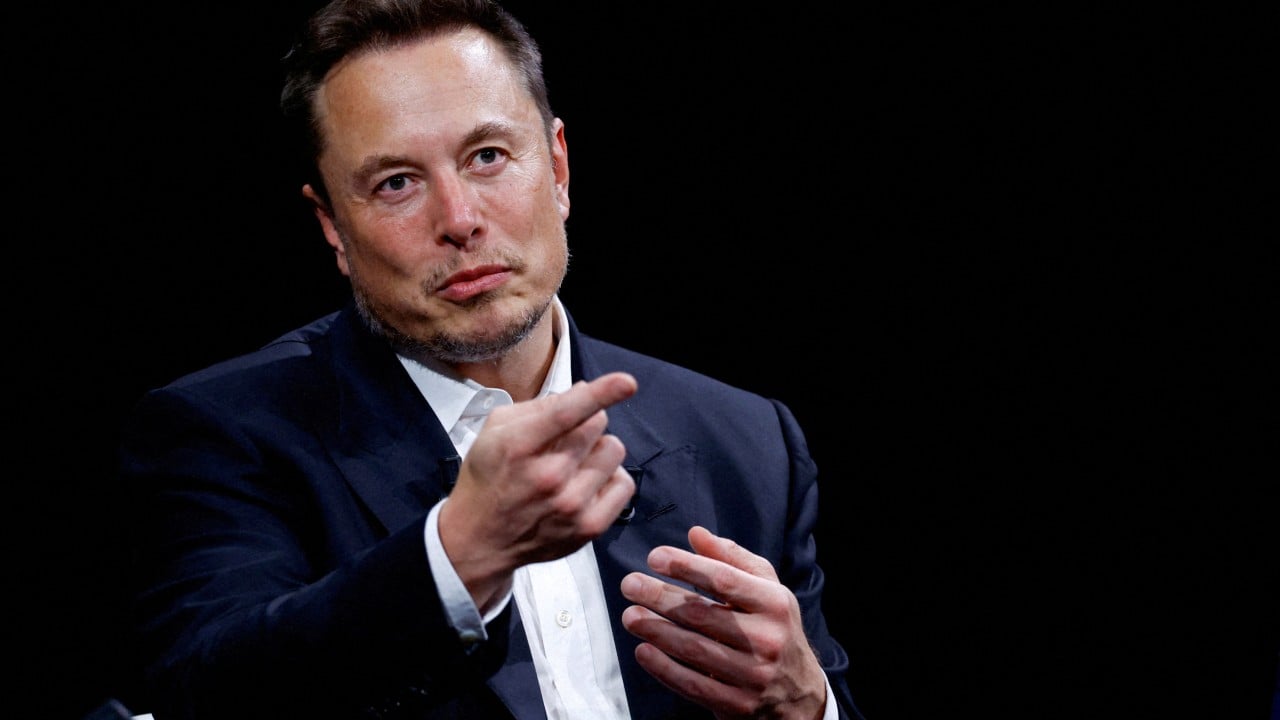
Elon Musk, Jensen Huang have opposing outlooks on AI neoclouds. Who is likely correct?
As investor anxiety over an artificial intelligence bubble mounts, SpaceX’s Elon Musk and Nvidia chief Jensen Huang have offered starkly divergent outlooks on whether the specialist cloud providers powering the boom can survive their mounting debts. While Musk has warned of impending collapses and consolidation among the more than 200 dedicated graphics processing unit (GPU) rental ventures known as “neoclouds”, Huang remains bullish, insisting that robust market demand will unlock the capital...
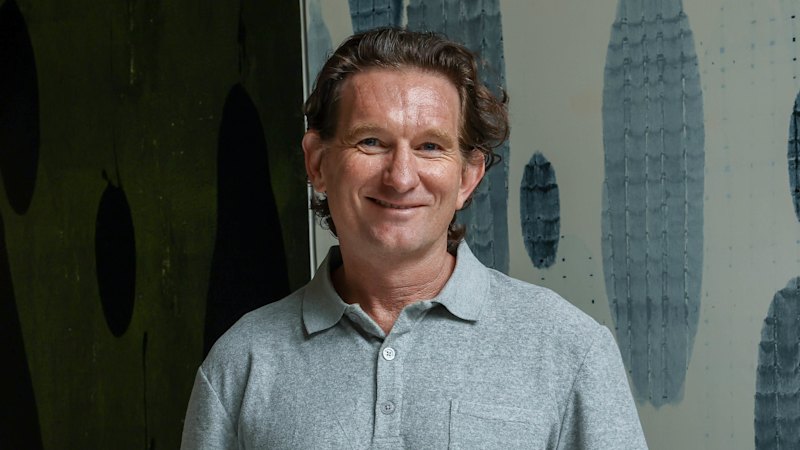
James Hird joins AI firm after missing out on Essendon coaching job
The AFL great will run a sports division at a $220 million company backed by his former club chairman Paul Little.
Huawei’s Tau Scaling Law roll-out reaches base stations in blow to US chip curbs
Huawei Technologies is already integrating elements of the Tau Scaling Law – a new chip design principle that helps the company overcome US export controls – into its wireless communications network, as it pushes for broader adoption across its products. The Chinese tech giant is using the “time compression” concept based on its Tau Scaling Law in its next-generation wireless base stations, according to a company statement released on Wednesday, and the new design is already delivering tangible...

Shop, scan, save: how to use OCBC overseas QR payments in 7 destinations
Travellers can unlock perks at merchants in 7 countries and stores like Don Quijote, Shake Shack and 7-Eleven, without juggling multiple apps or loyalty programmes.

HD Hyundai Q3 net profit up 40% to $1 bil.
HD Hyundai, the holding company of Korea's leading shipbuilding conglomerate, on Wednesday reported a third-quarter net profit of 1.38 trillion won ($1 billion), up 40 percent from a year earlier. The company said in a regulatory filing it posted 2.91 trillion won in operating profit for the July-September period, compared with 1.7 trillion won a year ago. Revenue also rose 21.2 percent to 22.08 trillion won.

Sangmidang seeks North American, European expansion through global partnerships
Hur Jin-soo, vice chairman of Korean bakery giant Sangmidang Holdings, met Gellert Global Group (GGG) Chairman George Gellert and U.S. Ambassador to France Charles Kushner in Paris earlier this week to explore broader partnerships in overseas markets. Sangmidang said Wednesday that Hur discussed business developments and potential cooperation with Gellert and other GGG executives. Samlip, Sangmidang’s mass-market bakery subsidiary, could work with GGG to expand through U.S. supermarket and food service distribution networks and potentially enter Canada and Mexico, the Korean company said. U.S.-based GGG imports and distributes food products to retailers, food service distributors, restaurants, hotels, cruise operators and food manufacturers across North America. It sources more than 4,000 products from 60 countries and generates more than $1.7 billion in sales per year. The discussion first took place on Oct. 18 when Hur attended a reception for GGG’s partner firms at the U.S. ambassador’s residence in Paris. Hosted by Kushner, the event brought together about 130 representatives

Hanwha's KAI bid bodes well for another defense leap forward
Hanwha Group’s potential acquisition of Korea Aerospace Industries (KAI) could give the country’s aerospace and defense industry a much-needed boost in the global market, as privately owned defense firms have significantly outpaced their state-backed rival in sales growth. Yet transferring control of a strategically important company to a private conglomerate would also raise questions over national security, market concentration and the public investment underpinning its technological achievements. KAI has remained under state ownership since its establishment in 1999, with the state-run Export-Import Bank of Korea as its largest shareholder, holding a 26.41 percent stake. Hanwha is the second-largest shareholder, with a 15.89 percent stake. KAI’s relatively modest growth compared with private-sector defense counterparts highlights the potential benefits of a change in ownership. Lagging behind other private defense firms, KAI’s annual sales reached 3.69 trillion won ($2.79 billion) in 2025, inching down from 3.81 trillion won in 2023. Over the same period, LIG Defense & Aerospac

Debate grows over KAI privatization as Hanwha aims to expand stake
The privatization of Korea Aerospace Industries (KAI) could gain momentum as the state-run Export-Import Bank of Korea (Eximbank) commissions a 1.8 billion won ($1.36 million) consulting project and the Fair Trade Commission (FTC) highlights the benefits of stronger competition among major defense companies. Although Eximbank and KAI have expressed reservations about a change in ownership, KAI’s slower growth compared to its defense industry peers, despite a boom in arms exports, is fueling calls for privatization. Eximbank is KAI’s largest shareholder, with a 26.41 percent stake. According to Rep. Ahn Sang-hoon of the main opposition People Power Party and other sources, Eximbank recently selected AT Kearney as the preferred bidder for the consulting project and is proceeding with the subsequent steps. The project will examine ways to strengthen Korea’s aerospace industry and foster global anchor companies. Reports that the project was initiated at the government’s request have also sparked controversy. On Oct. 20, KAI CEO Kim Jong-chool said the company’s ownership structure

EMAT seeks to reduce China reliance on rare earth magnets with Pohang facility
Evolution Metals & Technologies (EMAT), a Nasdaq-listed rare earth magnet producer, is making a big bet on Pohang, North Gyeongsang Province, by building a facility capable of producing 10,000 tons of sintered rare earth magnets annually for export to the U.S. and to other global customers seeking to reduce their reliance on China's dominant rare earth supply chain. The company plans to invest approximately 300 billion won ($224 million) in Pohang, including 223.8 billion won earmarked for building initial production capacity on a 118,000-square-meter site at the Blue Valley Industrial Complex in the city by 2027. EMAT and the Pohang city government signed a memorandum of understanding (MOU) on the investment project on Tuesday, with the city pledging administrative support for EMAT's plans. During an interview with The Korea Times, EMAT CEO Frank Moon stressed the need to distinguish between upstream and downstream operations. Citing China's dominance in the supply chain, he said geopolitical issues weigh heavily on the industry, and customers’ growing demand for alternatives to Chi